

Over the last few weeks, you’ve probably seen an article or headline talking about how the 30-year yield is the highest it has been since the early 2000’s.
Some take this as a note of caution, while others may see this as a very attractive rate. Ultimately, investors might be questioning whether they should be taking additional risk in the equities market or finding peace in what they might deem an attractive risk-free yield.
Quick shoutout to Hardika Singh, who researched the performance of tech stocks as the 10-year yield was rising and found that historically, tech stocks do better than the broader market relative to when the 10-year yield is dropping!
I’m not here to make any blanket recommendations to anyone. But the yield associated with Treasury bills, notes, and bonds should be considered carefully.
Take this post below. At face value, that seems pretty nice.
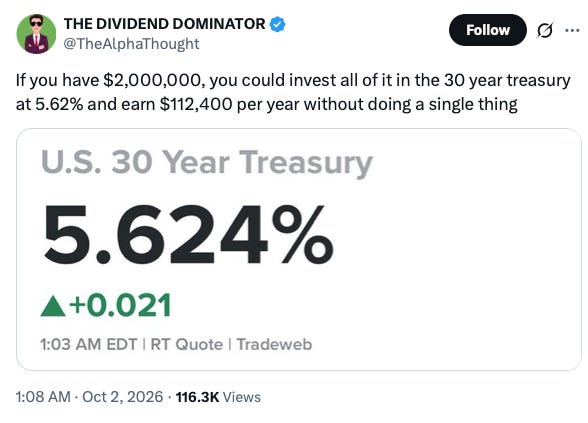
But here’s the thing, especially for young investors, this yield is essentially fixed. Once bought, we know what the bond will mature for and we know what the coupon is going to pay us each year.
The potential headwind? Inflation.
Inflation can quickly erode this “attractive” yield over the course of time. As an example, if inflation were to pace 3.5% for the entire 30 years, the real yield could look entirely different from the sticker yield we see in the media.
PS: This is before taxes as well!! Interest from Treasury bonds may be state tax free, but federal taxes can quickly add a drag to the returns.
Just as an additional note, 30-years is a very long time period. These types of bonds, while guaranteed if held to maturity, are incredibly sensitive to changes in interest rates. The term for that is duration. The duration of a bond measures its sensitivity to changes in interest rates.
So, the principal of our investment might be guaranteed if we hold it for 30 years, but at any other point in time prior to maturity, it is possible the value of the investment actually goes down. Anyone who bought a long-term Treasury during 2020-2021 would be seeing a big decline in their investment as rates have increased.
Other folks are taking a look at TIPS as well. Treasury Inflation Protected Securities, which are designed to protect against changes in inflation by adjustments to the principal.
I am no TIPS expert. But I would also highlight this: TIPS principal adjustments are calculated using CPI-U. This rate may not be what you personally experience when it comes to inflation.
Additionally, the CPI-U weighting calculation itself is subject to change every two years. The weightings are updated and the measure we use to get our TIPS adjustment may not be the same as what it was when we first purchased the TIPS.
Finally, the actual methodology of the calculation can change. Of course, some of these adjustments may be necessary and could even be helpful. But that bet might be outside the scope of what inflation you personally experience.
In my opinion, this begins to look more like locking in purchasing power as dictated by how CPI-U is calculated, which is much different from locking in purchasing power as it directly relates to the inflation experienced by the purchaser.
Many of the headlines about Treasuries are looking to spark reactions. Making a rash decision because of a headline can work out very poorly. We must work to understand how changes in the market impact ourselves before making any drastic decisions.
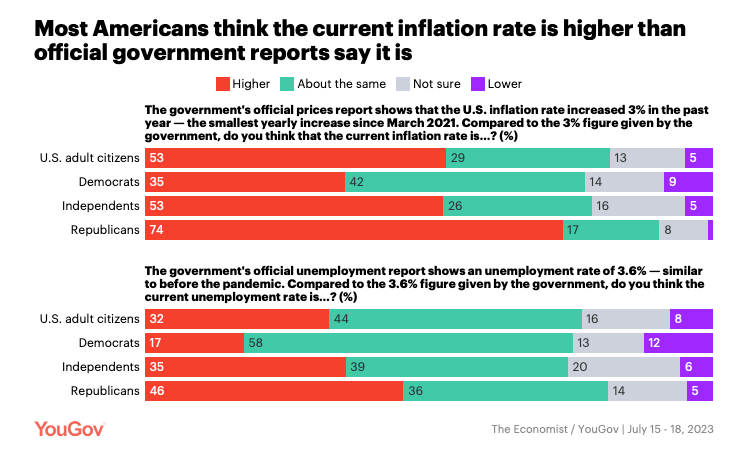
Side note: I find it ironic that TIPS are gaining a lot of traction. Especially, when a significant amount of people do not trust the inflation calculation.
This is for informational purposes only and is not intended as legal, tax, or investment advice or a recommendation of any particular security or strategy. The investment strategy and themes discussed herein may be unsuitable for investors depending on their specific investment objectives and financial situation. Opinions expressed in this commentary reflect subjective judgments of the author based on conditions at the time of publication and are subject to change without notice. Past performance is not indicative of future results.